
If you’ve spent any time around Christian music in the last two years, you’ve heard Forrest Frank. He was half of the pop duo Surfaces (“Sunday Best”) before he turned to worship music. Since then he has become one of the best-known artists in Christian music, with upbeat, sunny songs like God Is Good, Good Day and Your Way’s Better, and a huge following on social media. Gen Z loves him, and Gen Alpha may love him more. His music is easy for parents to put on and enjoy.
In November about the state of the world. The message, roughly, was this: things are getting worse, the world may be ending, and that’s okay, because God’s got us. It spread quickly, and we haven’t been able to stop thinking about it.
Please don’t hear us condemning him. We understand exactly where he is coming from. Jennifer grew up in a church culture that taught this way of thinking, and lived in it for years. We simply believe it is a naive and dangerous mindset, and we want to say why.
To check whether the video is a one-off or a pattern, we ran a statistical analysis on every song Forrest Frank has released from January 2023 on, 94 in all, reading each one start to finish. For each one we asked: does it mention pain? If it does, what does it do with that pain? Where is the pain located: his past, his present, the listener’s life, or the world? And what does the song say God saves us from?
The short answer is that the video is not a one-off. It is the shape of Forrest’s entire catalog, and it tells us something about his theology, and about the worldview his songs are shaping.

Spiritual bypassing
Platitudes that skip the wound are a way of not dealing with it
Dr. Alison Cook has a name for this. In her book The Best of You, she describes spiritual bypassing:
Spiritual bypassing is a way of using religious platitudes to encourage people to avoid dealing honestly with wounds and painful emotions like anger, grief, loneliness, or fear. … Instead of providing the healing balm of compassion and loving presence, these messages minimize, over-spiritualize, and encourage you to stay hidden. In effect, it’s wounding the already wounded in the name of faith. It’s saying, if you want to appear faithful, keep your pain to yourself.
She gives the following examples:
The examples are Cook’s; what the hurting person hears is our reading of them.
You can’t heal what you don’t acknowledge. You can’t transform what you’ve pretended doesn’t exist. … You heal, and become your true self in God, in the context of safety, honesty, love, and compassion.
Here is what Forrest Frank’s songs do with pain. Of the 78 songs that are about faith, 68 mention some hardship. That is to his credit: these are not songs that pretend life is easy. But look at what happens to the hardship once it is named.
Before and after. It was bad, God ended it, now life is good.
 No Longer Bound“I was lost until You found me”
 Lift My Hands“Man, I used to hate me”
 Thank You“Everything You’ve brought me through”
 Good Day“back when I was low... now I’m standing”
 Up!“I was down but now I’m up”
 What Living Is All About“I became a new creature in Christ”
- More Than a Feeling“I used to be a blind man”
- Life Is Good“I was in a dark place”
- Never Get Used to This“stuck inside that grave a long time”
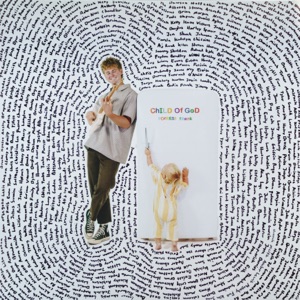 Heaven on This Earth“Took a minute, now I’m back in it”
- Alive“I was in the dark”
 Amen“If He robbed you from the grave”
 Celebration“I used to be a blind man”
- Home“You saw me broken and alone”
 Move It!“I was down bad, now I’m good”
 Jesus Is Alive“Once was a slave, He set me free”
 Somebody Prayed“spent most of my life acting like a fool”
 My Little Miracle“Didn’t know if we would make it”
Tap a row to see the songs. Each song is counted once, by its main way of handling hardship.
Nearly two in three songs resolve the pain. It is in the past (“I was in a dark place, then Jesus”), it is guaranteed not to win (“God’s got my back”), or it is waved off (“no need to stress”). This is not a song engaging suffering. It is a song announcing that suffering has been dealt with, which is the lighter cousin of the prosperity gospel: things were bad, now they’re not, I’m saved.
Only 2 songs, Miracle Worker and Where’d the Love Go?, leave the pain open before God. Only one, Misunderstood, ties the singer’s suffering to Christ’s. To be fair to Frank, 7 more do something the Psalms do too: they sit in the dark and say God is there, without promising the dark will lift. Those are some of his best. All told, 10 of the 68 songs stay in the hard place with God. 44 move on from it, and the rest point elsewhere: to heaven, to Christ’s return, or out to the listener.

The before
The gospel in these songs needs a “before” to contrast with
The most common move in Forrest’s catalog is the before-and-after. More than half of his faith songs tell some version of it. The question is what the “before” was.
In the gospel the apostles preached, the before is sin: we were dead in our trespasses, by nature children of wrath (Ephesians 2:1-3), and Christ died for us (Romans 5:8). In Frank’s songs the before is just as often misery: stress, emptiness, a heavy season, a dark place. More songs say God saves us from sadness and stress than from sin, death, and judgment combined.
A song can name more than one. Judgment, as something to be saved from, appears in 2.
That matters because of what gets promised on the other side. If what Jesus saves you from is sadness, then what he saves you for is happiness, now. And that is what most of the songs promise: good days, no worry, nothing can touch you. Of the songs that make that promise, only a handful mention the cross.
Tap or hover a cover to read its promise.
A before-and-after story has a problem: it runs out of before. Maybe that is because a conversion can be told only so many times. Whatever the reason, over four years the story-of-rescue songs fade, and something else replaces them.
2023 holds only five faith songs; read its bar loosely.
By 2026, Frank is singing less about his own past and more about the world, and the answer to the world is the same answer he gave to his own bad days: it’s handled. Jesus Is Coming Back Soon meets a darkening world with an imminent return, not with grief. It is also the year with the most songs where faith is at most a passing line: 6 of 21, mostly summer songs. That is the video in a sentence: the world is ending, but it’s fine.

Prosperity
This is the prosperity gospel with the money taken out
The prosperity gospel, in its classic form, teaches that faith secures health and wealth: God wants you rich and well, and if you aren’t, your faith is the problem. Forrest Frank doesn’t preach that. He rarely sings about money, and when he does, it is usually to say he doesn’t need it.
But the shape is the same, with the currency swapped. What faith secures in these songs is not a bigger house but a better day: no stress, no worry, no losses. 46 of his 78 faith songs make that promise outright. And the same corollary follows. If you are still anxious, still grieving, still stuck, the songs have a diagnosis ready: you are looking at it wrong. “Why so blue? Just switch your view” (Just the Way It Goes).
Not stressing ’bout a salary
Rich Man · 2024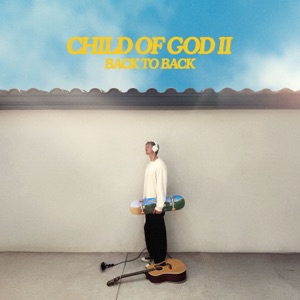
Blessings that outweigh the pain
God’s Got My Back · 2025
Why would I worry? Why would I stress?
Keep It Simple · 2025The battle’s been won
No L’s · 2025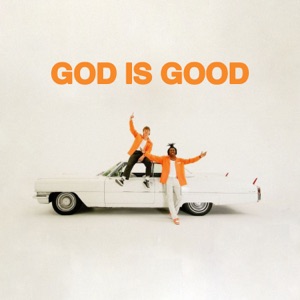
Some days be the worst... oh well, okay
God Is Good · 2024Ain’t no need to be stressin’
Woke Up This Morning · 2025What’s a big problem to a big God?
B.I.G. · 2025
everything is gonna be okay
Okay! · 2026
X-ray showed it was a miracle
What a Life · 2026back when I was low... now I’m standing
Good Day · 2024
Jesus promised his disciples something different: “In the world you will have tribulation. But take heart; I have overcome the world” (John 16:33). The peace he gives is not the absence of trouble but his presence in it, and his victory over it at the end.
Paul, who wrote “I can do all things through him who strengthens me,” wrote it about hunger. “I have learned in whatever situation I am to be content. I know how to be brought low, and I know how to abound. In any and every circumstance, I have learned the secret of facing plenty and hunger, abundance and need” (Philippians 4:11-13). Contentment, for Paul, was learned in want, not offered as a way out of it.
Hebrews 11 lists the faithful who “escaped the edge of the sword,” and then, in the same breath and by the same faith, those who “were sawn in two” and “went about in skins of sheep and goats, destitute, afflicted, mistreated” (Hebrews 11:34-38). Faith did not decide which of them suffered.
That is what makes hopecore (the online trend of relentlessly uplifting, everything-will-be-fine content) crossed with Christianity a dangerous theology. When the gospel is sold as a way to feel better, then the day it stops feeling better, the gospel seems to have failed, or you have. Joy is a fruit of the Spirit, and Frank’s songs are full of real joy. The problem is promising it as an outcome you can count on, instead of a gift God gives, often in the dark.

Comfort
It is easy to sing “it’s okay” when you are not the one suffering
This mindset is easiest to hold from a place of comfort. It is easy to sing this song when you are secure, well provided for, and not the one in the hard place.
It is different when you are targeted by racism, sexism, or religious prejudice. When you work more hours than are good for your body and mind and still can’t afford to live. When your healthcare is taken away or priced out of reach. When the air and water around you are polluted. When your food benefits are cut and you choose between eating and keeping the lights on. When your home is being bombed, and your land is a place of war, hunger, and oppression.
From the outside of all that, it is easy to shrug and sing a catchy tune, smiling, telling others it’s okay.
Darker bars are the kinds of suffering named above: poverty, illness, grief, violence and injustice. Death here means death named as the trouble; the list under Body and soul counts every song that reflects on dying.
The songs mention plenty of hardship, but it is almost all interior: stress, sadness, temptation, “the enemy.” Grief appears in 4 songs. Illness in 2. Money trouble in 5. A change of perspective can sometimes ease a stressful day; it cannot feed a family or end a war. A faith that only knows how to answer the first kind will have nothing to say to the second, except “it’s okay.”
And the answer to poverty, illness, and grief was never meant to be a better perspective. It was meant to be people.
We learn that God is good when his people act like it
Jennifer knows this from the inside.
I speak about this because my Facebook memories keep showing me how much of my life I spent saying, “I just need to remember that God is good,” in seasons when what I actually needed was community, love, care, and someone to acknowledge how hard it was.
I needed someone to say: This is hard. I see you. I’m sorry. How can I help? Instead, I was reminded that God is good.
Yes. Definitely. But do you know how I came to know that God is good? When his body acted like his body. When the hands and feet of Jesus behaved like hands and feet. I know God’s love through the love of his people, not by repeating a phrase to myself.
Jennifer
James has a word for the alternative: “If a brother or sister is poorly clothed and lacking in daily food, and one of you says to them, ‘Go in peace, be warmed and filled,’ without giving them the things needed for the body, what good is that?” (James 2:15-16). A blessing that costs the speaker nothing is not yet love.
The songs mostly speak in the first person singular: “I,” far more often than “we.” God and me, me and God: the church, the people who would bring the meal and sit in the hospital waiting room, is mostly absent. That reflects a larger failure: faith treated as a private relationship, rather than life in a community of people made right with God and with each other.

Body and soul
Not caring about the body or the world is a kind of Gnosticism
The Gnostics taught that soul and body were separate, that only the soul mattered, and that the body was something to escape. With that view it is easy not to care about suffering: it is only the body, and only the soul counts.
Don’t hear what I’m not saying. The soul matters. But the whole of Scripture refuses to split us in two. God made our bodies and called them good, and his end goal is to raise them. We may spend a time after death absent from the body, but in the end we will be reunited with glorified bodies. The goal is not escape and destruction. It is restoration. So we should care about creation, and about bodies, and what happens to them, because we are our bodies.
Paul says creation itself is groaning, and that “we ourselves, who have the firstfruits of the Spirit, groan inwardly as we wait eagerly for adoption as sons, the redemption of our bodies” (Romans 8:22-23). Christian hope does not make the groaning stop. It is what makes the groaning bearable, and honest. Resurrection, the hope that our bodies and this world will be made new, is named as the way God helps in only 9 of Frank’s songs.
Few churches teach Gnosticism outright, and Frank doesn’t either. But a theology can be orthodox on paper and Gnostic in practice, if the only thing it ever does with bodily, earthly suffering is look past it.
Take his song Always. It is sung to someone stressed and worn out, and it tells them: “You are loved, you are chosen / Your body isn’t broken / For every door that closes, a better one gets opened / You got a light inside, too radiant to hide.” Neither God nor Jesus is named. The love is “always coming your way,” but the song never says whose love it is or what it cost. Feeling “left out, burdened and weak” is called a lie from the enemy. It sounds less like a psalm than a manifestation mantra: say the good thing over yourself, and it will be true.
But what about the listener whose body is broken? Whose family has rejected them, whose doors keep closing, who doesn’t feel radiant at all? Scripture doesn’t tell that person their pain is a lie. It tells them the truth: “Though our outer self is wasting away, our inner self is being renewed day by day” (2 Corinthians 4:16). And it gives them someone to hold on to: “For my father and my mother have forsaken me, but the LORD will take me in” (Psalm 27:10). When everything else is gone, what is left to cling to is not a light inside us. It is Jesus, who was rejected by his own and whose body was broken for us.
Every day the Book of Common Prayer leads us through the Lord’s Prayer. We pray that God’s will be done “on earth as it is in heaven,” and we ask for daily bread, because God cares about the everyday needs of our bodies. Jesus’ ministry was not only the forgiveness of sins. He healed bodies, fed the hungry, and washed feet. If only the soul mattered, why did he spend so much of his ministry on bodies?
Scripture tells us to weep with those who weep (Romans 12:15). That is something entirely different from cheerfully singing that it’s okay if the world is ending.
And at the grave of his friend, knowing he would raise him within the hour, Jesus wept (John 11:35). Knowing how the story ends did not keep him from grieving the middle of it. In Frank’s catalog, death comes up in 11 songs. Most of them hold it at arm’s length: borrowed time, tomorrow isn’t promised, heaven on my mind. And not one of them grieves anyone. In four years of songs, no one is mourned: not a parent, not a friend, not a child.
 HallelujahA sleepless night: “don’t know if I wake up alive.” Passed over quickly.
- Life Is GoodLooks back on a time he was “about ready to end my time.”
- Hey GrandadAn aging grandfather looks back: wealth didn’t satisfy, and he would seek God more.
- Rich Man“In the end we all end up dirt,” used to put money in its place.
- Well DoneHopes to hear “well done” when he meets God at the end of his life.
- Heaven on This EarthPledges faithfulness “’til He put me in the dirt.”
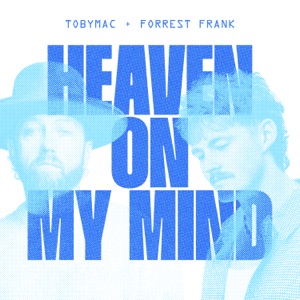 Heaven on My MindImagines his days ending and meeting others again in heaven.
- TestimonyA grandfather near death wishes he had spent more time with Jesus.
 Jesus Is Coming Back SoonWe live on borrowed time; Christ could return any day.
- Jesus Is AliveOther religions’ founders died; Christ rose bodily.
- What a LifeTomorrow isn’t promised; a child expected to die of cancer was healed.
None of the 11 mourns someone who has died.
The heroes of Scripture did not meet trouble with a shrug
We teach our kids the stories of Rahab, Moses, Esther, Ruth, and David and Goliath. None of those heroes met the trouble in front of them with a shrug and a catchy tune. They acted: Rahab hid the spies, Esther went to the king, David ran at the giant. And when they suffered, they cried out to God about it; David’s psalms are full of that. We tell our kids to “be like Daniel,” who kept praying with the lions waiting. How can the same people turn around and say that none of this pain really matters?
Escapist, everything-burns theology is not harmless. If the world is ending anyway, it is easy to stop caring for the people and the place in front of us. Whatever you believe about how the end will come, caring for human beings who bear the image of God, and for the creation God called good, is what it means to love our neighbor as ourselves.

Lament
God gave us words for pain that has not been fixed yet
Everyday hardships matter to God. He keeps our tears in a bottle (Psalm 56:8). He gave us the Psalms to pray, and the book of Lamentations, and neither of them bypasses anything. They are full of real, raw language of pain.
About a third of the Psalms are laments. They have a shape worth knowing, because it is a different shape from most of the songs we sing. Step through both.
“How long, O LORD? Will you forget me forever? How long will you hide your face from me?”
The complaint is said in the present tense, to God, and it stays in the poem after the praise. Psalm 13
Both shapes end in praise. The difference is where the singer is standing. The lament praises from inside the trouble, in the present tense, with the complaint still on the page. The typical song praises from after it. One teaches you what to do on the worst night of your life. The other teaches you what to say once it is over, and quietly suggests that if it isn’t over, your faith is the problem.
Lamentations shows the same thing at its center. Its most famous verses, “The steadfast love of the LORD never ceases; his mercies never come to an end; they are new every morning” (Lamentations 3:22-23), are sung in a burned city, and the book goes back to grieving after it says them.
“God is good, all the time; all the time, God is good” is not powerful around the Thanksgiving table. It is powerful when it is said from a broken spirit, by the person affected by a devastating loss: not as a way to discard their pain, but as an affirmation, like Job’s: “Though he slay me, I will hope in him; yet I will argue my ways to his face” (Job 13:15).
Notice the second half. “Argue” is a courtroom word in Hebrew: Job will plead his case. And “my ways” means the course of his life, everything he has done and everything that has happened to him. He will lay all of it out, honestly, to God’s face. The same breath that says I will hope in him says I will be honest with you about this. That is not a lack of faith. It is what faith sounds like in the middle.

Seen
Being seen in pain is what keeps faith alive
For Jennifer, the cheerful version nearly cost her everything.
The “just smile and say God is good” mindset almost cost me my faith. It made me believe God didn’t actually care about me. It also gave others permission to ignore my pain. It felt like a patronizing pat on the head, a “be warmed and filled,” and it left me alone and unloved.
What kept my faith was other people coming alongside me: seeing me, understanding me, and giving me room to say, “This really sucks, it’s hard, and I hate it.” That is how I came to believe that maybe God really does love me.
Jennifer
None of this means joy is suspect. The Bible is full of it, and Frank’s gift for it is real; many people have found their way to church through these songs. The problem is not that he sings “God is good.” It is that his catalog has almost nothing for the days when that is hard to believe. And the answer is not one song with a little more realism in it. It is a wider faith: a Christian who sings only one kind of song will have only one kind of faith, and it will not hold when the night comes. So, Forrest fans: sing the joyful songs. Then learn the other ones too.

Eric writes the essays and liturgies here, and hosts Family Moment. He is Director of Website & Graphics at Solving.org, a dad, and a follower of Jesus.

Stay at home mom of four children, wife to Brad, and a lover of the body of Christ. Central WI, member of the Episcopal Church.
How we did this. The catalog was pulled from Apple Music’s listing of Forrest Frank releases; lyrics from LRCLIB, a public lyrics database. The worship era is every release from January 2023 on, excluding secular side projects, traditional hymns and carols he covered, and duplicate versions. That leaves 94 songs, 78 of them faith songs. The other 16 are love songs, summer songs and Christmas songs; some mention God in a line or two (“the Lord provided all that I need”), but faith is not what they are about, so they sit outside the counts.
Each song was read in full and coded against a fixed codebook: whether hardship appears, what kind, when it happens, the song’s main way of handling it, what God saves from, how God helps, and whether the song promises a good life now. Each song was coded once, and a song’s main mode is a judgment call; treat individual labels as a careful reading, not a measurement. Unreleased music is not included.
Alison Cook is quoted from The Best of You (Thomas Nelson, 2022). Chapter photographs from Pexels, used under the Pexels License. Album artwork © its respective owners, shown for commentary; song lines are quoted briefly for the same purpose. Song links go to Apple Music.
Scripture passages in the verse previews are from the ESV® Bible (The Holy Bible, English Standard Version®), © 2001 by Crossway, a publishing ministry of Good News Publishers. Used by permission. All rights reserved.
What song or prayer has carried you through a season that wasn’t fixed yet?