Sunday morning, I was sitting in my pew (chair, really, not many have pews anymore) when a mom and her two older teenage kids made their way into church. The teens were fighting, vocally. They couldn't stand to be near each other. It was clear in their body language and facial expressions, and they weren't even trying to hide it. You could tell Mom was just checked out; she didn't even want to deal with it. She was going to let them deal with each other, and eventually the son decided he wasn't even going to sit in the same row as his sister and slumped down in a pew a few rows back. That would show her!
The body language didn't change for the whole service, until we got past the sermon and reached the communion portion. At our church we "pass the peace" prior to taking communion. It comes from Jesus' words in Matthew 5:23–24: "If you are offering your gift at the altar and there remember that your brother has something against you, leave your gift there... First be reconciled to your brother." Paired with Paul's call to "examine himself, then, and so eat of the bread and drink of the cup" (1 Cor 11:28), it gives you the opportunity to be in right relationship with your Christian brother and your Savior before you come to the table.
So we stood, passed the peace, and in the 10 seconds I had, I asked the teenage son, "Do you know why we pass the peace?" He nodded and said, "To make peace with each other." Exactly. He had it right. So, application. "Then this is a really good chance for you to make peace with your sister before you take communion," I said. He nodded, but didn't say anything, and we parted ways. I've no idea if they ended up making up, but I'm sure they did: siblings usually do things like that.
I'm embarrassed by this story. It makes me look like an old church lady, and for me, a true introvert, it's surprising it even happened. I feel like I overstepped. But in some regards, I also feel like this is what's missing in many churches today. Not doctrinal correctness: many churches are doing the right things. But actual hands-on instruction that makes sense and is applicable to the moment. It's actually pivotal to how people experience church.
Let's look at just two super common practices in church that are widely misunderstood.
Communion
We know we take communion because Jesus told us to, but how do we functionally do that in a reverent manner?
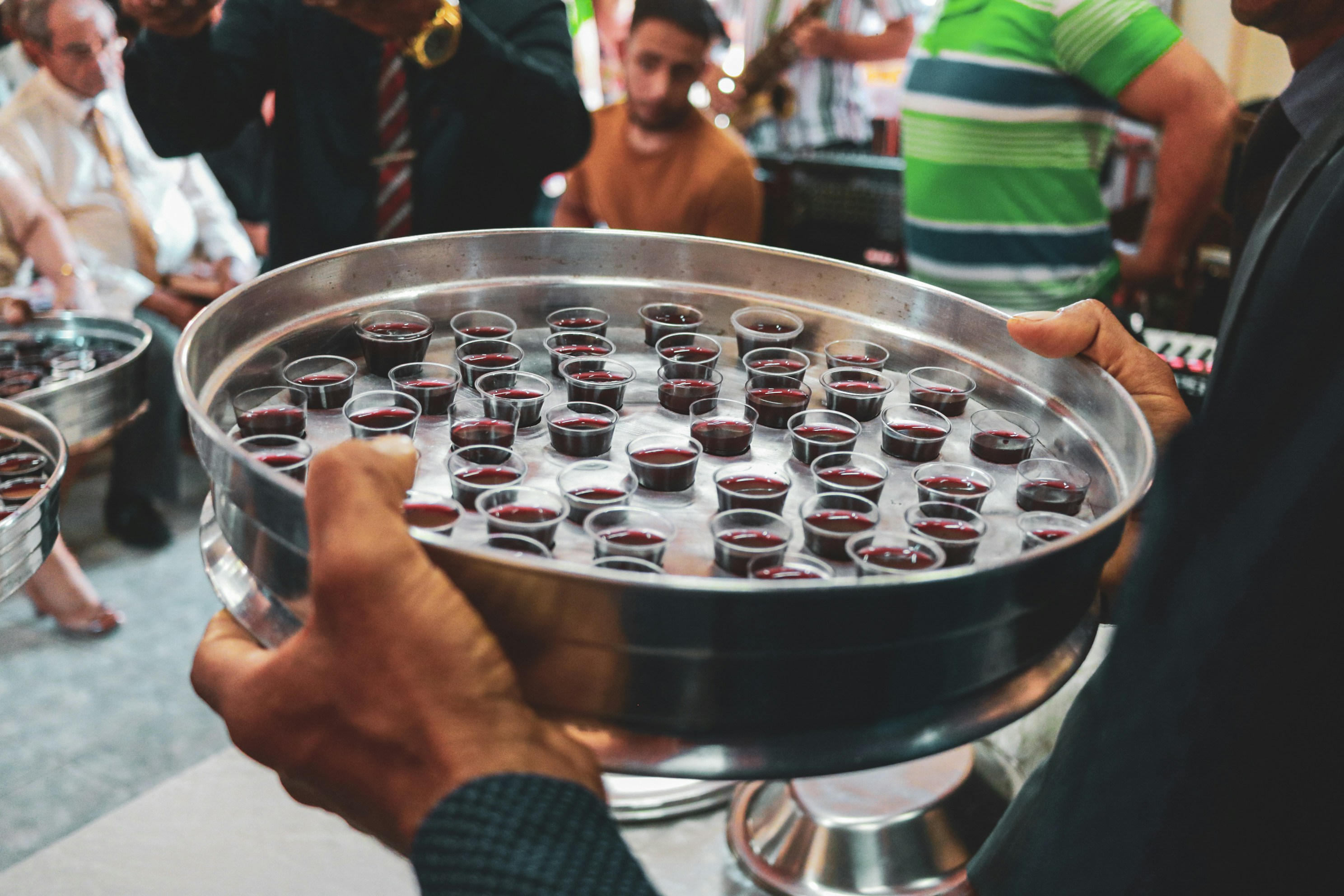
Each church has a different tradition, but mine is fairly common in the evangelical church: We take a piece of bread, and then we approach a table with small cups of grape juice, and we grab one. For ease of access, my church has a trash can sitting next to the table, so 80% of people do what they figure they should: Stuff the bread in their mouth, take the shot, toss the cup in the trash, return to their seat.
It makes me extremely sad: there's almost no intent present.
The practical instructions for communion are found in Scripture. They're complete. They address exactly how we are to take communion: before, during and after. Here's each one, and what it looks like on Sunday morning.
Before
1Examine yourself.
"Let a person examine himself, then, and so eat of the bread and drink of the cup" (1 Cor 11:28). Ask whether you are trusting Christ alone, repenting of known sin, and resolved to follow Him.
On SundayWhen the pastor introduces communion, stay seated, close your eyes, and silently ask three questions: Am I trusting Christ? Is there sin I'm holding onto? Will I follow Him this week?
- 2
Be reconciled first.
"If you are offering your gift at the altar and there remember that your brother has something against you, leave your gift there... First be reconciled to your brother" (Matt 5:23–24). Settle what you can, or at least resolve in your heart to pursue peace.
On SundayWhen you pass the peace, go first to the person you're at odds with. Look them in the eye, shake their hand, and say, "The peace of Christ be with you." If they aren't in the room, decide right then when you'll reach out this week.
- 3
Confess sin.
"If we confess our sins, he is faithful and just to forgive us" (1 John 1:9). Come as a forgiven sinner, not a perfect one.
On SundayWhile you wait in line, pray one short, specific prayer: "Lord, I have [name the sin]. Forgive me for Jesus' sake." No speech needed.
- 4
Don't come carelessly.
Whoever eats "in an unworthy manner will be guilty concerning the body and blood of the Lord" (1 Cor 11:27). The warning is against hypocrisy and unrepentance, not against weakness or doubt.
On SundayIf you're holding onto a sin you refuse to let go of, it's right to let the elements pass and talk with a pastor or elder afterward. If you're only struggling with doubt, come anyway. The Supper was given to strengthen weak believers.
During
5Remember Christ's death.
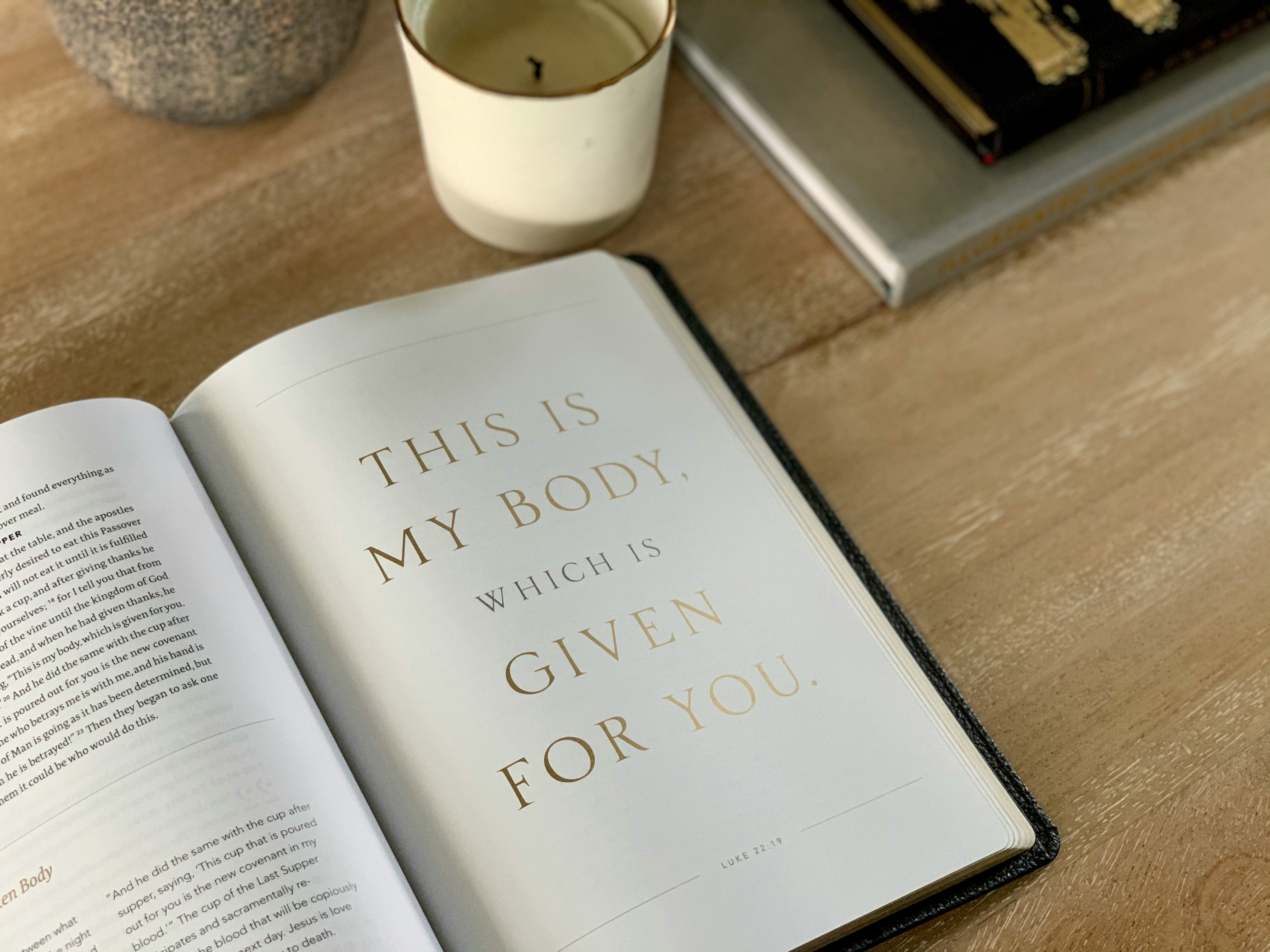
"Do this in remembrance of me" (Luke 22:19; 1 Cor 11:24–25). Fix your mind on His body given and blood shed for you.
On SundayDon't eat the bread while walking. Hold it, pause, and say quietly, "Christ's body, given for me." Then eat.
- 6
Discern the body.
Eat "discerning the body" (1 Cor 11:29). Recognize Christ's presence and also the church as His body. You are eating with brothers and sisters, not alone (1 Cor 10:17).
On SundayIf your church allows it, carry the cup back to your seat. Before you drink, look around the room. These people are your family. If you're with your spouse or kids, wait and drink together.
- 7
Receive by faith.
The cup is "a participation in the blood of Christ" and the bread "a participation in the body of Christ" (1 Cor 10:16). Feed on Christ spiritually, trusting His promises.
On SundayHold the cup and say, "His blood, shed for me." Drink slowly. You aren't taking a shot. You're receiving a gift.
- 8
Proclaim the gospel.
"As often as you eat this bread and drink the cup, you proclaim the Lord's death until he comes" (1 Cor 11:26).
On SundayLean over and tell your kids, in one sentence, what just happened: "Jesus died for our sins, and He's coming back."
- 9
Look forward.
Jesus will drink it new "in my Father's kingdom" (Matt 26:29). The Supper is a foretaste of the marriage supper of the Lamb (Rev 19:9).
On SundayClose with one sentence of hope: "Come, Lord Jesus." This meal is a preview of the one to come.
After
10Give thanks.
Jesus "gave thanks" (1 Cor 11:24), and they sang a hymn afterward (Matt 26:30).
On SundayBefore you stand, pray a quick thank-you. Then sing the next song as thanksgiving, not exit music. The cup goes in the trash on your way out, not first.
- 11
Walk in renewed obedience.
You cannot "drink the cup of the Lord and the cup of demons" (1 Cor 10:21). Leave committed to holiness and love for the body.
On SundayBefore you leave the building, name one thing you'll do differently this week. Say it out loud to your spouse or a friend on the drive home.
We suck at explaining things as Christians.
Every single Sunday, we do the same thing and people still don't know functionally: take your juice and bread, go sit in your seat, talk to yourself. Pray with your family. Break out of the rote robotics and experience the joy in the meal that God has given you.
Worship
I've been a Christian for almost 30 years, and I've never heard a church tell us how we should worship (and rarely why we worship) prior to launching into their first Sunday song.
There are plenty of articles and memes asking why people aren't singing anymore in church. In Six Reasons Congregational Singing Is Waning, Thom Rainer points to things like a steady influx of new songs without sufficient time to learn them, songs pitched in a range beyond most people's ability, and music so loud you can't hear others in the congregation. But his first reason is the one that sticks with me: many church members don't prepare themselves for worship. It's common for people to point out that men especially don't seem to want to sing. But at a baseline, I think the reason people don't sing is because we don't actually ask them to sing.
We ask people to stand and they usually stand. We don't tell them why they should stand. We don't really ask them to sing, and we don't ever tell them why they should sing: we just launch into 20 minutes of emotional music and hope they follow along.
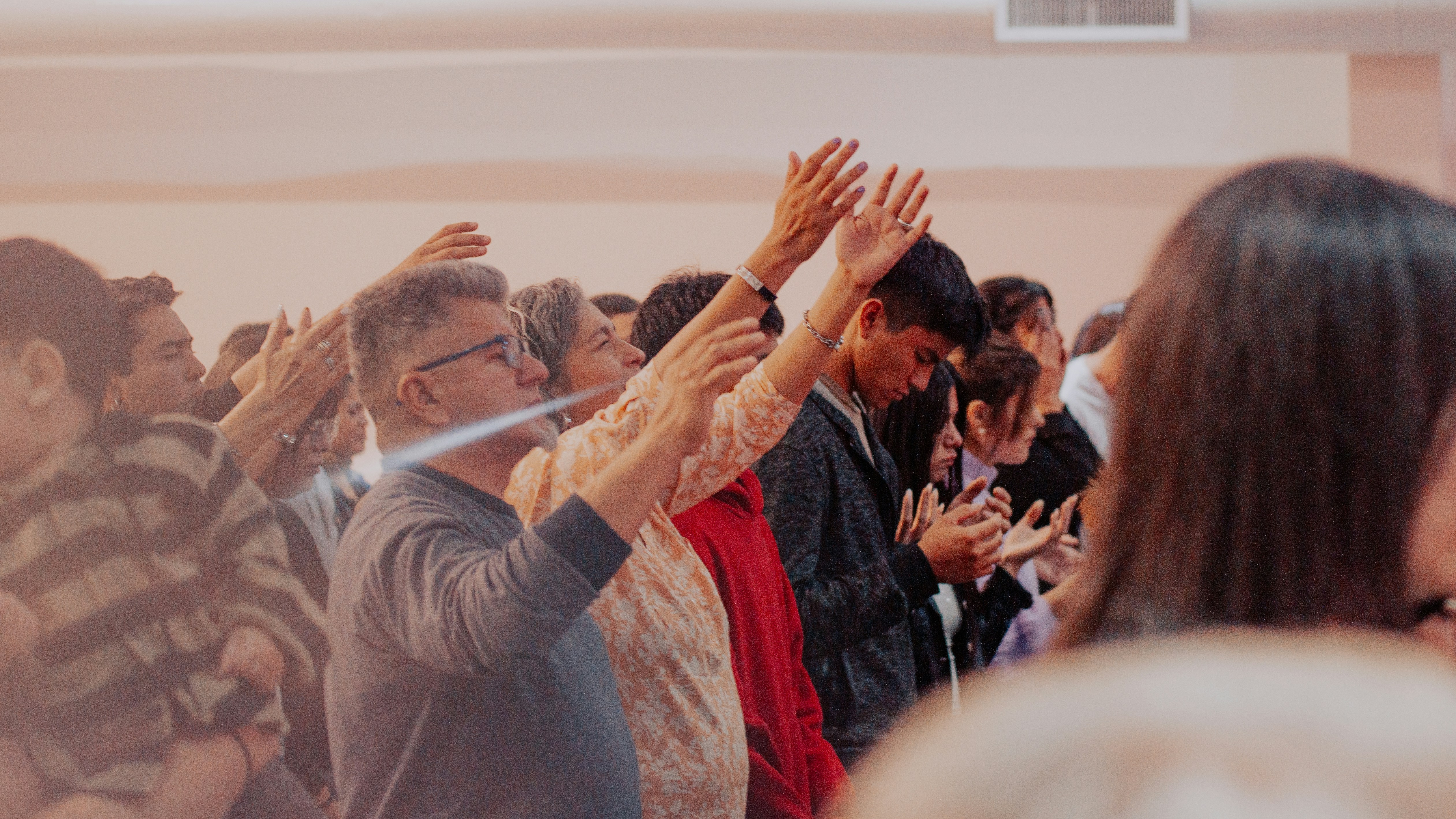
When you're asked to stand, stand because the King is present, not because the band started. If your body won't let you stand, sit tall and lift your eyes. God knows your frame.
When the pastor prays, actually bow your head and close your eyes. At home, try kneeling with your kids for family prayer. They'll remember it.
If a line moves you, lift your hands. Don't raise them to be seen, and don't hold them down because you're afraid of being seen. Just make sure you aren't lifting them while holding a grudge against the person beside you.
When I teach kids in Sunday school, I make sure to physically instruct them on how and why we do things. Left to themselves, they don't understand that we stand out of reverence; they'd rather sit on the floor because standing is hard and tiring. But when they understand they are standing because God is the most important person to worship, the most important person in their lives, they begin to actually internalize actions associated with doctrine, and amazingly, they follow through!
The theological practical divide
I've long held that theologians, especially those at the highest levels of education, owe it to the people in the pews to bring theological concepts down to our level. That's why I've dedicated a good portion of my career to creating children's books that communicate timeless truths in a way even kids can understand. It's also why I created Gospel Focused: Family Moment, a weekly five-minute podcast that gives families a simple, repeatable rhythm for talking about God together. But to some extent, understanding the theology behind a doctrine is often not practical enough for people to understand how to perform the doctrine itself.
But to some extent, understanding the theology behind a doctrine is often not practical enough for people to understand how to perform the doctrine itself.
We used to do these things called catechisms in the church. They were just questions and answers about God that congregants were expected to know. And we need them. Ligonier's 2025 State of Theology survey found that 53% of American evangelicals agree that everyone sins a little but most people are good by nature (Scripture says the opposite: Rom 3:10–12), and 53% think the Holy Spirit is a force rather than a personal being (is this Star Wars?). Those aren't fringe doctrines. That's the gospel and the Trinity.
of American evangelicals agree everyone sins a little but most people are good by nature
Scripture says the opposite: Rom 3:10–12
of American evangelicals think the Holy Spirit is a force rather than a personal being
is this Star Wars?
When we think about the church not having a very functional understanding of God, the Bible, the Trinity, and how everything works together in the way that we've worshiped for 2,000 years, I think catechisms are amazingly helpful. We've seen a resurgence in the past few years of families catechizing their kids with resources like the New City Catechism, a joint project between Redeemer Presbyterian Church and The Gospel Coalition that lays out 52 questions and answers on God, human nature, sin, Christ, the Holy Spirit, and more.
But the historic catechisms did something most modern ones don't: they gave instructions. The Westminster Larger Catechism spends five full questions (171–175) on how to prepare for communion, what to do while you're taking it, and what to do afterward. It tells believers to "carefully watch the elements and actions of the sacrament" and "meditate warmly on His death and suffering." That's not just doctrine. That's direction.
Theology that never reaches our hands and feet stays in our heads. I only had ten seconds with that teenage son, and I didn't give him a lecture on the doctrine of reconciliation. I told him what to do. Sometimes that's all it takes.

Eric writes the essays and liturgies here, and hosts Family Moment. He is Director of Website & Graphics at Solving.org, a dad, and a follower of Jesus.
Scripture passages in the verse previews are from the ESV® Bible (The Holy Bible, English Standard Version®), © 2001 by Crossway, a publishing ministry of Good News Publishers. Used by permission. All rights reserved.